Joy Oluchi : The World Through My Eyes

Documenting people, places, cultures, histories and the stories that shape us.

  • UNDER THE WATER
    A Dredging Journey Told by Joy Oluchi

    I still remember the day the story began.

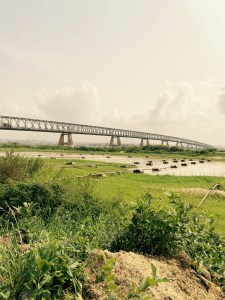
    I was on my way back going to Asaba from Anambra, and right at the Onitha bridge sitting quietly by the window of the vehicle, letting the wind touch my face.

    The sun was bright, the day was busy,, and the road was alive with traffic.

    Then something caught my eye.

    Under one of the bridges, I saw men moving quickly.

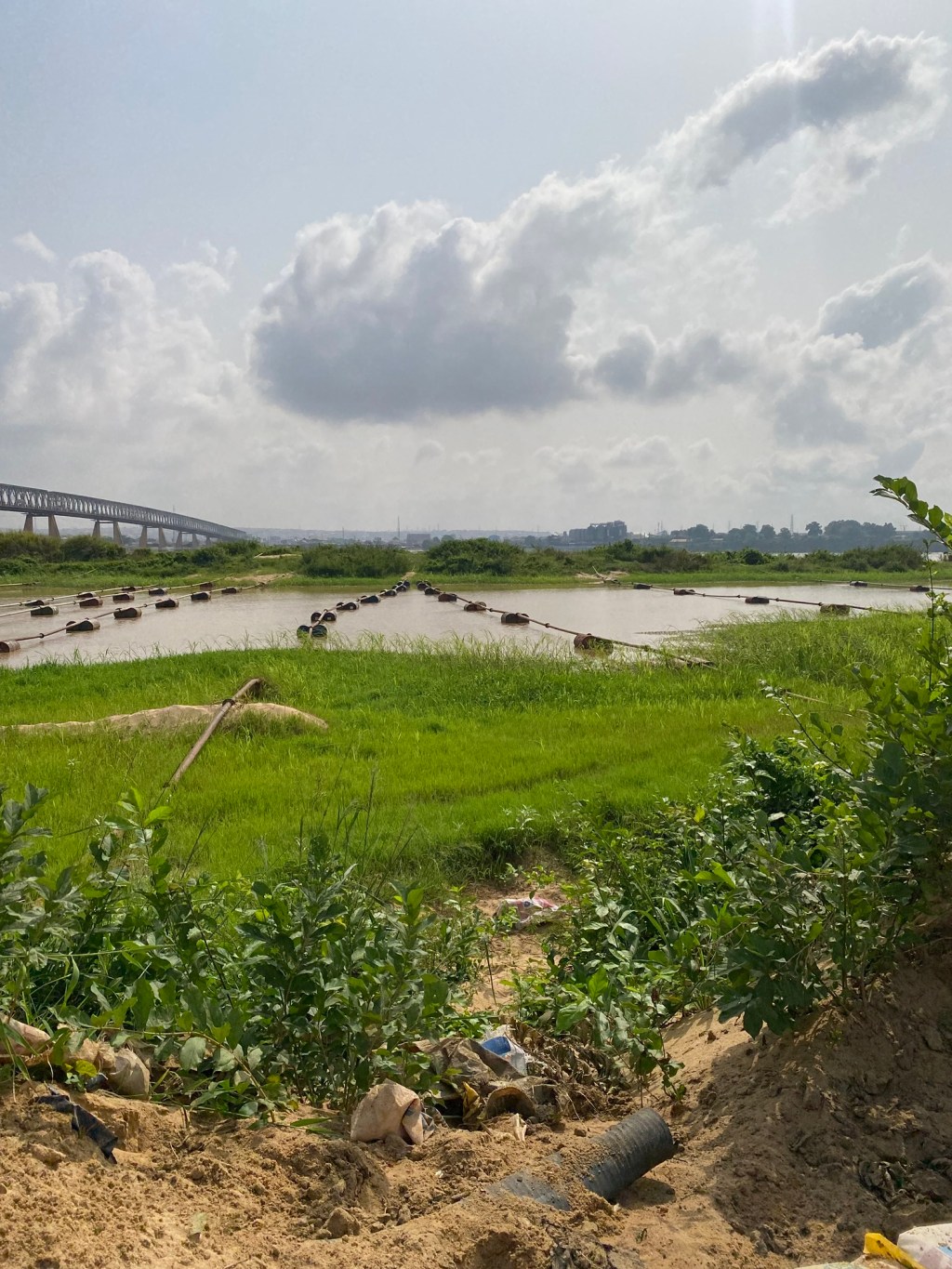
    Engines roared, water splashed, and long pipes stretched into the river like giant arms.

    I watched them closely, wondering what they were doing.

    “Is it fishing?” I asked the person sitting beside me.

    He laughed gently.

    “No, not fishing. They are removing sand from the bottom of the water. It’s called dredging.”

    Dredging.

    The word stuck to my heart like glue.

    That night, I opened my laptop and started reading.

    And reading.

    And reading.

    What I saw amazed me,this simple sand, pulled from the bottom of our rivers, becomes the foundation of our homes, roads, markets, and even the bridges we walk on.

    Immediately, my curiosity turned into a mission.

    I told myself:

    “I must see this with my own eyes. I must touch it, feel it, understand it.”
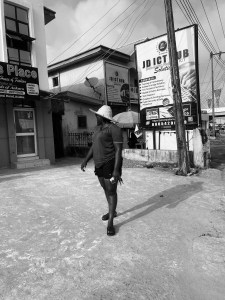
    The Journey Begins

    A few days later, I informed my team.

    We picked a date, packed our bags, and prepared for the adventure.

    That morning, we woke up before the city fully opened its eyes.

    The air was cool.

    The sky was clear.

    The sun came out softly, blessing the day with golden brightness.

    People were already outside

    sweeping their compounds, opening their shops, carrying loads on their heads, riding bikes.

    Nigeria is a country where dawn never sleeps.

    As we drove, the road became quieter, and the journey became smoother.

    It wasn’t too far, yet it felt like traveling into a hidden world.
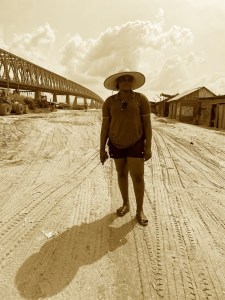
    Arrival :The Red Road and the Dusty Welcome

    We reached a junction and had to cross over.

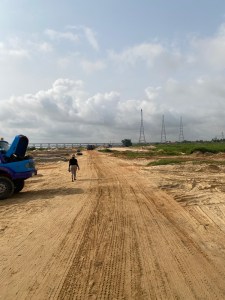
    In front of us spread a wide, red sandy road untarred, uneven, but full of life.Every step I took made soft red dust rise behind my slippers.Dumper trucks rumbled past, their heavy tires sinking into the sand, carrying yesterday’s dredging work to new destinations.I kept walking…the sound of engines grew louder…the air became moist with river breeze…Then suddenly ,the river opened before me.
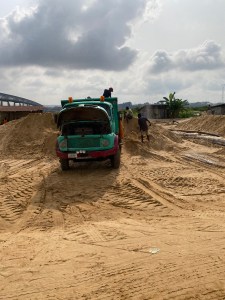
    A Busy World at 7:00 AM

    By 7 or 8 in the morning, the place was already dancing with activity.

    It felt like I had stepped into another city

    one powered not by electricity or markets,

    but by water, sand, and human strength.

    Pipes were pumping,

    trucks were loading,

    workers were shouting instructions,

    women were selling food,

    men were carrying shovels,

    and far inside the river, a dredger floated like a giant beast at work.

    The whole scene was breathtaking.
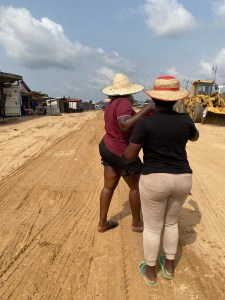
    Meeting the Lady of the River

    The first person I walked up to was a woman.

    She was beautiful,dark-skinned, curvy, confident, and glowing in the morning sun.

    There was something bold about her presence.

    I greeted her and introduced myself.

    I told her why I came, what I wanted to learn, and that I hoped she wouldn’t mind showing me around.

    To my surprise, her face lit up with excitement.

    “You came to learn? To see? Ah! No problem, I will carry you around,” she said, smiling warmly.

    She was more than willing to help.

    And before I even asked, she shared that she owned two dredging lines

    a woman thriving in a space many people thought belonged only to men.

    In that moment, I felt proud of her without even knowing her name.
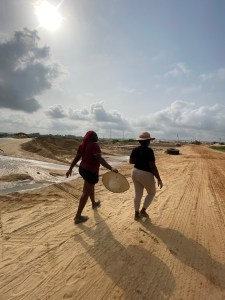
    Inside the World of Sand and Water

    As she led me around, every step uncovered a new story.

    I saw:

    A dredger sitting on the river like a giant metal boat Long suction pipes disappearing deep into the water A mixture of sand and water rushing out of the pipe with force The sand drying under the sun, slowly turning into heaps Trucks waiting in line to carry it away Men pushing wheelbarrows Others filling tippers with shovels Some leveling the ground And the endless humming of machines

    This was not just work.

    This was life.

    A heartbeat.

    A rhythm.

    A place where many families earn their daily bread.
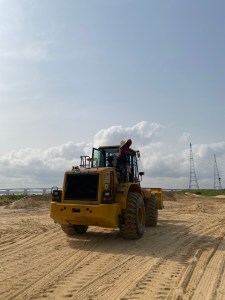
    Stepping Into the Work

    I didn’t just watch from a distance—

    I became part of the story.

    I climbed onto a payloader.

    The engine growled like a living creature.

    I held a pumping pipe steady as sand and water sprayed out.

    My hands vibrated from the pressure.

    I picked up a shovel.

    Yes,me.

    And I pushed sand forward, laughing at how heavy each scoop felt.

    It was messy, it was tiring, and it was absolutely beautiful.

    Because sometimes…

    to understand a story, you must let the story touch you.
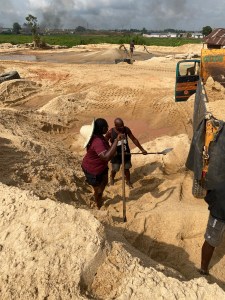
    What I Learned

    This visit opened my eyes to something important:

    Before a house becomes a home…

    before a road becomes a path…

    before a market becomes a meeting point…

    before a building becomes a landmark…

    …it begins right here.

    At the river.

    With sand pulled from the earth,

    with machines roaring,

    with people working together.

    Construction doesn’t start with architects.It starts with the river.
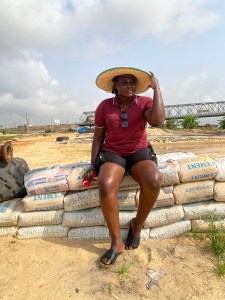
    A Story That Must Be Told

    As I left the site, covered in sand and sweat, a deep respect settled in my heart.

    I understood the saying:

    “A tree does not make a forest.”

    It takes people, machines, teamwork, courage, and community to make this work possible.

    And I knew this story had to be shared

    for those who have seen dredging but don’t know what it means,

    for those who admire buildings but don’t know where they begin,

    and for those who love stories of people, work, and the world around us.
    And This Is Just the Beginning

    My name is Joy Oluchi,

    a storyteller with a curious heart,

    and this is the story of how a simple moment in a moving vehicle

    led me to the river where construction is born.

    In my next story, I will take you deeper

    into the business, the opportunities,

    and the secrets behind sand dredging.

    Until then…

    thank you for walking with me.
  • Chapter Two: The Naming

    The discovery of the calm, wide creek brought great excitement to the fishermen. After exploring the place and feeling how steady and settled the ground was, they fished for many hours. That day, their canoe carried more fish than they had seen in a long time. The water gave freely. The land felt peaceful. The wind felt gentle. It was as if the place itself was inviting them to stay.

    When they returned to their families, their voices were full of wonder. They spoke of a place where the fish were many. They spoke of a place where the soil felt firm. They spoke of a place where the earth did not shake under their feet. The people listened closely. They understood that the men had found something rare and precious.

    Without wasting time, they gathered their belongings. They carried baskets, mats, cooking pots, and the few treasures each family owned. They paddled through the creek, following the men to the place that had captured their hearts.

    When they arrived, the children were the first to shout with joy. They jumped around the sandy edges of the creek and pointed at the fish moving in the water. The women smiled as they touched the soil and felt how rich it was. The men nodded quietly, knowing they had chosen well.

    It was on that day, while looking at the calm creek and the steady land, that one of the founders spoke words that would shape history. In their early Ijaw dialect, he looked around and said: Odi modii.

    It meant,

    Pond of Fishes. This place stands firm, and the ground is settled and ready.

    The words touched everyone who heard them. They felt true. They felt right. They carried the spirit of the place. The people began to repeat the phrase as they worked. They said it as they built the first small huts from palm fronds. They said it as they dried their nets under the warm sun. They said it as they called out to one another across the water.

    Slowly, the phrase blended and became one.

    It became the name we know today.

    Odimodi.

    More families arrived in the following days. Some came because they heard of the abundant fish. Some came because they were searching for safety. Others came because they believed the land was blessed. The small cluster of huts grew into a little settlement.

    Smoke rose gently from early morning fires. Children laughed as they chased one another near the creek. Women washed their pots and prepared meals. Men repaired their canoes and set out to fish. Life was beginning to take shape. Hope was beginning to grow.

    The name Odimodi carried a deep and steady sound. It rolled like soft thunder far away in the sky. It settled into the heart like a secret blessing. It felt strong. It felt ancient. It felt like it belonged to the land and the people who lived upon it.

    The settlement was no longer just a place.

    It had become a home with a name.

    A home that would grow.

    A home that would stand.

    This was the birth of Odimodi.

    A village that rose from hope.

    A village built by courage.

    A village that would one day become known far beyond the creeks that first welcomed its people.

    To be continued…

    Written by Joy Oluchi

  • The Village Called Odimodi

    Chapter One: The First Journey

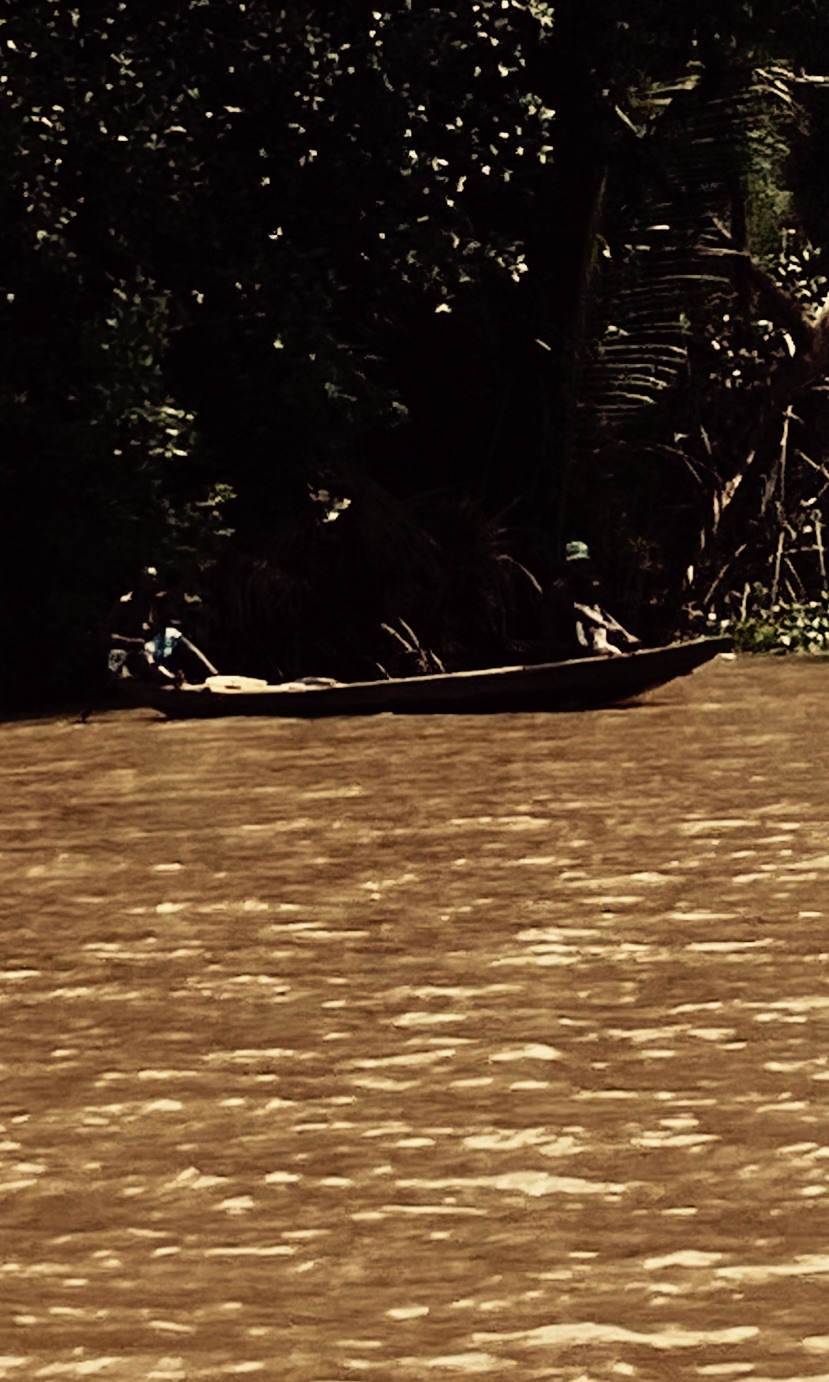
    Many, many years ago, so long that no one alive today can say the exact time, a small group of fishermen paddled slowly through the deep creeks of the Niger Delta. Their canoe was old and strong, carved from a single iroko tree. The men inside had been on the water for many days. Some say it may have even been weeks. They drifted through the wide water paths, guided by hope and courage.

    These fishermen were not wandering without direction. They were searching for a new place to call home. Their old settlement had become unsafe. Floods were washing away their houses. Other groups were troubling them. Fish had become scarce. So they pushed forward, letting the stars at night guide their path and letting their hearts keep them strong. They believed that somewhere ahead, the water would be kind to them again.

    Some nights, they slept inside the canoe. The water rocked them gently like a mother holding a newborn child. On some mornings, they woke to the sweet calls of birds. Their songs echoed across the creeks like the sound of drums calling everyone to gather. Even though their bodies were tired, their spirits refused to give up.

    Then, one special morning changed everything.

    The Discovery

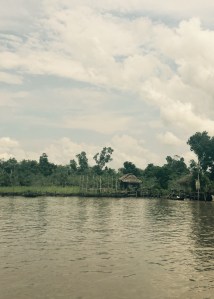
    The sun rose slowly that day. Its golden light spread across the water as if someone had poured palm oil on the surface. The fishermen paddled toward a narrow opening between two tall mangrove trees. The place looked ordinary at first, until they passed through.

    Suddenly, they entered a wide and calm space. The creek opened into a large, round area. It looked as if the earth itself had shaped a bowl just to hold the water.

    Right away, they knew the place was different.

    Fish were everywhere. Fat fish jumped out of the water. Silver fish moved in groups. These were the kind that could feed families for many days. Crabs walked slowly along the muddy banks as if they were not afraid of anything. Birds sat on low branches, watching the men as if they were welcoming new visitors.

    The oldest fisherman looked around carefully. He felt something in his heart. He whispered softly, “This place is special.”

    The water was deep enough for canoes but calm like a sleeping child. Palm trees threw long shadows on the soil. The ground was dark and rich. It was perfect for farming. It was a place a person could live, fish, plant and raise children in peace.

    The men looked at one another. Without speaking, they all understood the same thing.

    They had found home.

    To be continued…

    Written by Joy Oluchi